
Consumer electronics assembly, optical bonding, and specialty ink applications increasingly demand adhesives that cure in seconds rather than hours, without thermal stress on heat-sensitive substrates, and without releasing volatile organic compounds (VOCs). Conventional two-part addition-cure silicone adhesives deliver exceptional thermal stability and elasticity, but their slow cure cycles — often requiring 30–120 minutes at elevated temperatures — create severe bottlenecks on automated assembly lines. Conversely, standard acrylic UV adhesives cure instantaneously under light exposure, but suffer from high volumetric shrinkage (6–10%), excessive brittleness, and poor long-term heat resistance.
UV curable silicone chemistry built on dimethacrylate-functional PDMS solves this directly. As a highly reactive reactive silicone oil crosslinker, dimethacrylate PDMS combines the sub-second cure speed of free-radical photopolymerization with the low modulus, wide service-temperature range, and high optical clarity of a pure siloxane backbone. The result is an ultra-fast crosslinking system with exceptionally low cure shrinkage, superior stress dissipation, and sustained elastomeric performance across demanding electronic, optical, and graphic arts applications.
1. Dimethacrylate PDMS Chemistry: Telechelic Bifunctionality vs. Monofunctional Chains
The core building block is a telechelic polymer: a PDMS chain carrying methacrylate double bonds at both ends, typically methacryloxypropyl groups attached to terminal silicon atoms (MA-PDMS-MA). This difunctional structure is chemically distinct from monofunctional silicone acrylates:

Monofunctional PDMS, with a single reactive end-group, forms pendant side chains during copolymerization while leaving the polymer backbone linear. It cannot build a three-dimensional network on its own, functioning primarily as a surface-modifying leveling or slip additive. Dimethacrylate PDMS, by contrast, possesses two reactive sites. When exposed to free radicals, each end of the silicone chain copolymerizes with adjacent chains or crosslinkers, building an elastomeric three-dimensional network where the flexible siloxane segment forms the elastic crosslink bridges. This telechelic bifunctionality is what enables dimethacrylate PDMS to act as a true structural crosslinker rather than merely an additive.
The reaction kinetics are what make this chemistry commercially compelling. Under 365 nm or 395 nm LED-UV exposure, photoinitiators (such as TPO or Omnirad 819) undergo rapid homolytic cleavage, initiating free-radical addition across the methacrylate C=C double bonds. The reaction reaches high conversion in 2–10 seconds at ambient temperature, producing an optically clear, elastic thermoset without the oven-cure dwell times required by conventional platinum-catalyzed silicone formulations.
2. Overcoming Shrinkage and Internal Stress in Optical & Electronic Bonding
Volumetric shrinkage is the single most damaging failure mode in precision UV bonding. Conventional pure acrylate UV adhesives shrink 6–10% during photopolymerization as van der Waals distances between monomer molecules collapse into covalent bond distances. In optical bonding of display panels, camera module alignment, and sensor potting, this shrinkage generates severe internal stress that causes optical birefringence (Newton’s rings, mura defects), substrate warpage, micro-cracking, and interfacial delamination under temperature cycling.
Dimethacrylate PDMS addresses this at the molecular level. The high-molecular-weight flexible siloxane backbone dilutes double-bond density per unit volume, reducing cure shrinkage to below 1.5% — a four-to-sixfold reduction versus standard acrylic adhesives. Simultaneously, the low glass transition temperature of the PDMS segment (Tg down to −120°C) and exceptionally low Young’s modulus (typically 0.5–5.0 MPa) allow the cured network to absorb and dissipate interfacial stresses caused by coefficient of thermal expansion (CTE) mismatches between glass, metal, and plastic substrates.
These properties make dimethacrylate PDMS well suited to optical clear adhesive silicone formulations for display bonding, camera lens assembly, and semiconductor component encapsulation, where optical clarity (>99% transmittance in the visible range), low dielectric constant, and thermal cycling durability from −40°C to +150°C are critical.
For custom bonding architectures requiring specialized reactivity, extended spacer lengths, or dual UV-moisture shadow cure capabilities, tailored silane crosslinkers for adhesives provide customized synthesis pathways matching specific electronic adhesive viscosity, refractive index, and curing speed specifications.
3. Performance Upgrades in UV Inks and Release Coatings
In UV ink formulation, dimethacrylate PDMS functions as a dual-purpose UV ink crosslinker — building crosslink density for mechanical film strength while simultaneously imparting permanent surface slip, scratch resistance, and anti-rub properties. Because the silicone is incorporated into the crosslinked network via both terminal methacrylate groups, it cannot migrate, bloom, or cause ghosting or print contamination on adjacent sheets or rolled stocks.
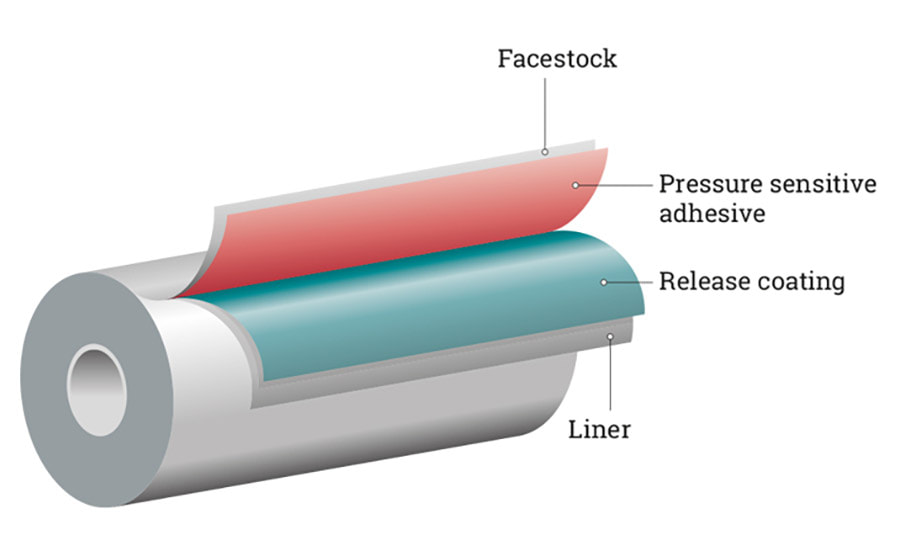
In radiation-curable silicone release coating systems, dimethacrylate PDMS provides the base crosslinked silicone network applied to release liners for pressure-sensitive adhesive (PSA) tapes and label stocks. The rapid UV cure eliminates the high-temperature oven drying required for thermal-cure addition-cure silicone release chemistries, permitting the use of thermally sensitive filmic liners (such as thin PET or BOPP) without thermal distortion or dimensional change, while maintaining stable, low release force over time.
The wide siloxane-backbone service temperature range (-50°C to +200°C) and inherent resistance to yellowing make this chemistry equally valuable in UV screen printing inks and overprint varnishes where outdoor weatherability and non-yellowing optical clarity are required.
4. Formulation Guidelines: Viscosity, Compatibility, and Photoinitiator Selection
Formulating with dimethacrylate PDMS requires attention to three fundamental parameters:
- Molecular Weight Selection: Dimethacrylate PDMS is available across a range of molecular weights (typically 1,000–20,000 g/mol). Lower-molecular-weight grades (1,000–3,000 g/mol) provide higher crosslink density, higher hardness, and faster cure speed, ideal for thin-film coatings and UV inks. Higher-molecular-weight grades (5,000–20,000 g/mol) deliver ultra-low modulus, higher elongation (up to 200%), and lower shrinkage, optimal for optical adhesives and electronic potting.
- Resin Compatibility: Due to the low solubility parameter of PDMS, blending with polar acrylate monomers (such as isobornyl acrylate, HDDA, or urethane acrylates) can lead to micro-phase separation and haze. Incorporating compatibilizing reactive diluents — such as acrylated silicone polyethers or low-polarity monomers like lauryl acrylate — ensures homogeneous, optically clear formulations.
- Photoinitiator and Atmosphere: Like all free-radical UV systems, methacrylate polymerization is subject to oxygen inhibition at the surface. Using long-wavelength type I photoinitiators (TPO, TPO-L, Omnirad 819) with 395 nm LED sources ensures deep cure through thick adhesive sections. For thin surface layers (inks, release coatings), nitrogen inerting or amine synergists are recommended to suppress oxygen quenching and ensure complete surface cure.
Surface performance is the other half of the formulation: the dimethacrylate crosslinker sets the network, while the slip package sets the coefficient of friction. Our UV coating slip additive guide explains how reactive silicone acrylates deliver permanent slip without impairing recoatability.
5. Frequently Asked Questions (FAQs)
Q1: How does dimethacrylate PDMS differ from monofunctional silicone acrylate in UV curing?
Dimethacrylate PDMS is telechelic with reactive double bonds at both chain ends, allowing it to crosslink into a three-dimensional elastomeric network. Monofunctional silicone acrylate has only one reactive group and forms pendant branches on growing polymer chains, functioning as a surface leveling or slip additive rather than an elastomeric network former.
Q2: Why does UV curable silicone adhesive produce much lower shrinkage than conventional acrylic UV adhesives?
The high-molecular-weight siloxane backbone dilutes the double bond concentration per unit volume compared to low-molecular-weight acrylic monomers. Because volumetric shrinkage directly correlates with the number of C=C double bonds converted into covalent bonds during polymerization, dimethacrylate PDMS adhesives shrink less than 1.5%, compared to 6–10% in standard acrylic adhesives.
Q3: Can dimethacrylate PDMS adhesives be cured using LED-UV curing equipment?
Yes. When paired with appropriate acylphosphine oxide photoinitiators (such as TPO or Omnirad 819), dimethacrylate PDMS cures rapidly under 365 nm, 385 nm, or 395 nm LED-UV radiation, achieving full mechanical strength in 2–10 seconds at room temperature without generating excessive heat.
Q4: How does UV curable silicone perform in optical clear adhesive (OCA) applications?
It delivers high optical transmittance (>99%), refractive index matching, and zero yellowing under prolonged UV and heat exposure. Crucially, its ultra-low elastic modulus and minimal cure shrinkage prevent display panel warpage and eliminate mura stress defects common with rigid acrylic OCAs.
Q5: What causes hazing when blending dimethacrylate PDMS with standard acrylate monomers, and how is it resolved?
Hazing results from solubility parameter mismatch between non-polar PDMS chains and polar acrylate monomers, leading to micro-phase separation. It is resolved by incorporating compatibilizing reactive diluents (such as acrylated polyether silicones or low-polarity monomers like isobornyl acrylate) or selecting modified PDMS grades with appropriate organic side-chain compatibility.
Beyond adhesives and inks, a pdms methacrylate composite application in dentistry uses the same dimethacrylate cure chemistry.
For inkjet-grade formulations, a low-viscosity silicone dimethacrylate oligomer enables jettable, low-migration curable inks — see the dedicated oligomer guide.
Where dimethacrylate crosslinkers give network cure, single-ended reactive PDMS adds the monofunctional tack option — compare both in our PSA guide.
