
UV-cured coatings cure fast, but speed alone does not protect the surface. Without the right slip additive for UV coatings, the finish can feel tacky, scratch easily under daily contact, and fail mar-resistance tests within weeks of application. A slip additive lowers the coefficient of friction (COF) at the coating surface, protecting it from scuffs, marring, and wear.
There are two fundamental classes of slip additive. Reactive (copolymerizable) types — mainly silicone acrylates — bond into the crosslinked network during UV cure, so the slip effect is permanent. Migratory types — silicone oils, waxes, and fluoro modifiers — diffuse to the surface after cure, delivering high initial slip but potentially affecting adhesion in multi-layer systems. Choosing between them is the central question this guide addresses.
Slip Additive Types: Technical Comparison
The table below summarizes the four main chemistries used as a slip additive for UV coatings.
| Type | Mechanism | Slip / Scratch Resistance | Recoatability | Typical Loading |
|---|---|---|---|---|
| Silicone acrylate (reactive) | Copolymerizes into crosslink network | Permanent | Good | 0.5–3% |
| Silicone oil (migratory) | Migrates to surface | High | Poor | 0.1–1% |
| Wax | Surface crystallization | Moderate | Moderate | 0.5–2% |
| Fluoro-modified | Low surface energy | High | Poor | 0.1–0.5% |
Silicone acrylate is the workhorse for most UV coating systems. Its acrylate groups participate directly in radical polymerization, locking the silicone backbone into the film permanently. For deeper chemistry, see the silicone acrylate additives that copolymerize for permanent anti-scratch and slip. A structurally related material is triisopropylsilyl acrylate, a silyl-protected acrylate monomer used as a reactive surface modifier.
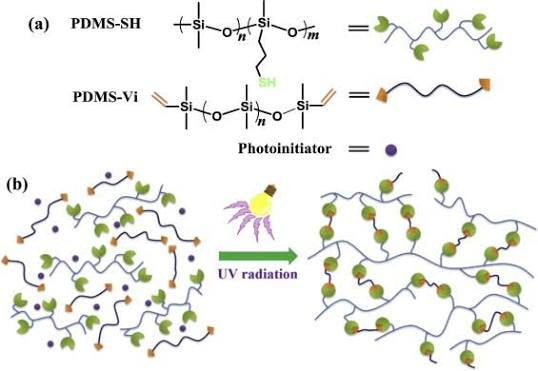
Silicone oil delivers a noticeably slippery surface at very low dose, but because it migrates rather than bonds, it can bleed to the interface with the next coat and destroy intercoat adhesion — a critical liability in furniture or industrial multi-layer systems.
Wax (polyethylene or PTFE microparticles) provides moderate COF reduction and reasonable recoatability, making it a pragmatic choice when recoating matters but budget is constrained.
Fluoro-modified slip agents reach the lowest possible surface energy — useful for fingerprint resistance and anti-soiling — but share the poor recoatability limitation of migratory silicone oils. Browse our silane products for the reactive silanes behind these additives.
Application Scenarios
| Application | Recommended Slip Additive | Key Benefit |
|---|---|---|
| UV wood / furniture coatings | Reactive silicone acrylate | Permanent scratch resistance; recoatable |
| Industrial coil coatings & inks | Silicone acrylate | Slip + leveling in one additive |
| Plastics & packaging | Wax / silicone oil | Antiblock, low cost |
| Premium 3C / electronics coatings | Fluoro-modified | Fingerprint resistance, ultra-low COF |
UV wood and furniture is where reactive silicone acrylate shines most clearly. Multi-coat lacquer systems demand that every intermediate layer accept the next without delamination. A migratory additive would poison each interface; a reactive one does not.
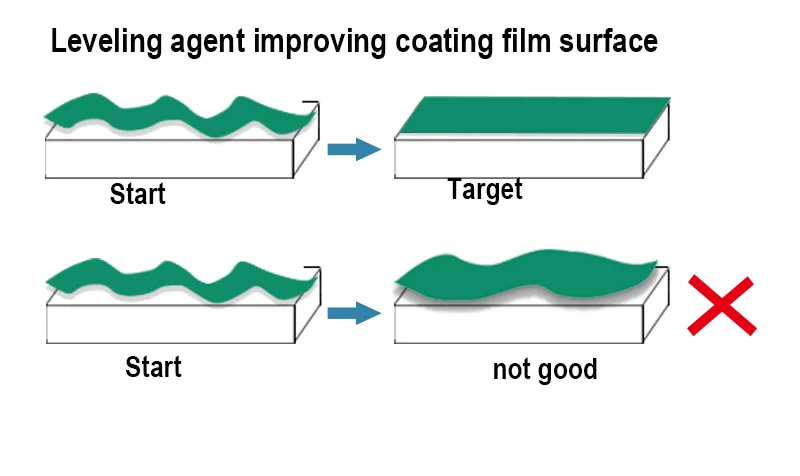
Coil coatings and UV inks benefit from silicone acrylate’s dual action — it simultaneously reduces surface tension to improve substrate wetting (leveling) and lowers COF for rub resistance in press and converting operations. For broader surface functionality, consider a reactive silicone leveling agent for permanent surface slip without migration.
Packaging and plastics face antiblock demands more than scratch demands. Wax or low-dose silicone oil handles antiblock well and is cost-effective for high-volume applications where recoating is not required.
Electronics and 3C coatings (phone covers, laptop housings) prioritize the ultra-low surface energy only fluoro chemistry provides — fingerprints bead off and abrasion marks are less visible even when they occur.
Selection Guide
Follow these four decision points when specifying a slip additive for UV coatings:
Permanent vs. temporary slip — If the coating will be sanded, overcoated, or built up in multiple passes, a reactive silicone acrylate is the only safe choice. Read more in our guide to reactive silicone oil chemistry and functional types.
Recoatability requirement — Silicone oil and fluoro additives both impair intercoat adhesion. If the spec requires recoating, rule them out.
Loading level — Start at 0.5% for silicone acrylate and 0.1% for fluoro modifiers. Overdosing silicone oil causes surface haze and cratering. PDMS-based UV curable silicone crosslinkers can extend functionality at higher loadings without haze.
Slip vs. leveling — A slip additive reduces COF; a leveling agent reduces surface tension to eliminate craters and orange peel. These are related but distinct functions. Many silicone acrylate grades combine both; purely migratory silicone oils do not.
Frequently Asked Questions (FAQs)
Q1: What is a slip additive in UV coatings?
A slip additive is a surface-active compound that lowers the coefficient of friction of a UV-cured film, reducing marring, scratching, and tactile drag. It can be reactive (bonds into the network) or migratory (diffuses to the surface post-cure).
Q2: What is the difference between a slip additive and a leveling agent?
A leveling agent reduces surface tension to eliminate surface defects like craters and orange peel during wet film flow. A slip additive primarily reduces COF after cure. Some reactive silicone acrylate grades perform both functions; others are selective.
Q3: Which slip additive is best for UV-cured coatings?
Reactive silicone acrylate is the best all-round choice for UV coatings: it delivers permanent scratch and mar resistance, integrates into the crosslinked network, and does not impair recoatability.
Q4: How much slip additive should I add?
Typical loadings: silicone acrylate 0.5–3%, silicone oil 0.1–1%, wax 0.5–2%, fluoro-modified 0.1–0.5%. Always run a dose-response trial — more is not always better, particularly with silicone oil where overdose causes haze.
Q5: Does a silicone slip additive affect recoatability?
It depends on chemistry. Reactive silicone acrylates do not impair recoatability because they are covalently locked into the film. Migratory silicone oils do impair recoatability because they bleed to the intercoat interface and reduce adhesion.
