
Silicone diacrylate is a reactive silicone oligomer with two acrylate end groups (CH₂=CH–COO–) attached to a polydimethylsiloxane (PDMS) backbone. This dual-functional structure combines the low surface energy, flexibility, and weatherability of silicone with the fast radical polymerization of acrylates. When both end groups carry an α-methyl substituent, the compound becomes silicone dimethacrylate instead.
Unlike hydroxy- or vinyl-terminated PDMS, silicone diacrylate takes part directly in UV/EB free-radical curing. No condensation catalyst is required. It crosslinks into a solid network in seconds under UV light or an electron beam.
Explore the full range of silane products for coupling agents, crosslinkers, and reactive silicones.
Acrylate vs. Methacrylate: Which Reacts Faster?
The two end-group types behave quite differently in formulation.
Acrylate (–CH₂=CH–COO–) has no steric hindrance at the α-carbon. It reacts faster, gives lower viscosity, and suits high-speed coating lines. Methacrylate (–CH₂=C(CH₃)–COO–) reacts more slowly due to the methyl group. However, it raises the glass-transition temperature (Tg) and improves hardness and heat resistance.
| Property | Acrylate | Methacrylate |
|---|---|---|
| Cure speed | Faster | Slower |
| Viscosity | Lower | Higher |
| Tg / Hardness | Lower | Higher |
| Best for | High-speed coating | High-Tg, heat-resistant systems |

For acrylate-functional building blocks, triisopropylsilyl acrylate offers a sterically protected reactive handle.
Difunctional vs. Monofunctional Architecture
Functionality determines the role a molecule plays in the cured network.
A difunctional (di) molecule carries a reactive group at each end. During cure, both ends participate and form a three-dimensional crosslinked network. This delivers hardness, solvent resistance, and dimensional stability.
A monofunctional (mono) molecule has only one reactive end. It grafts as a linear side chain onto a growing polymer. The result is improved flexibility and surface slip — without disrupting substrate compatibility.
| Structure | Functionality | Cured product | Typical role |
|---|---|---|---|
| Silicone diacrylate / dimethacrylate | Di (2) | Crosslinked network | Base resin, crosslinker |
| Monofunctional PDMS acrylate | Mono (1) | Linear graft | Slip / flexibility modifier |
In short: choose di to build a network; choose mono to modify one.
UV & EB Cure Mechanism
Silicone diacrylate crosslinks through free-radical photopolymerization.
Under UV light, a photoinitiator absorbs radiation and generates radicals. These radicals attack the acrylate double bonds, triggering rapid chain growth and crosslinking. Liquid oligomer converts to a solid film in seconds — at low temperature and with minimal VOC emissions.
Electron beam (EB) curing skips the photoinitiator entirely. High-energy electrons generate radicals directly. This makes EB well suited for thick films and pigmented systems where UV penetration is limited.
Both routes are faster and cleaner than condensation-cured silicones. To explore UV crosslinking chemistry further, see how UV curable silicone functions as a dedicated crosslinker.
Key Applications of Silicone Diacrylate
The pairing of a reactive backbone with a silicone skeleton opens up a wide range of end uses:
UV coatings & inks — fast cure, low surface energy, excellent weatherability.
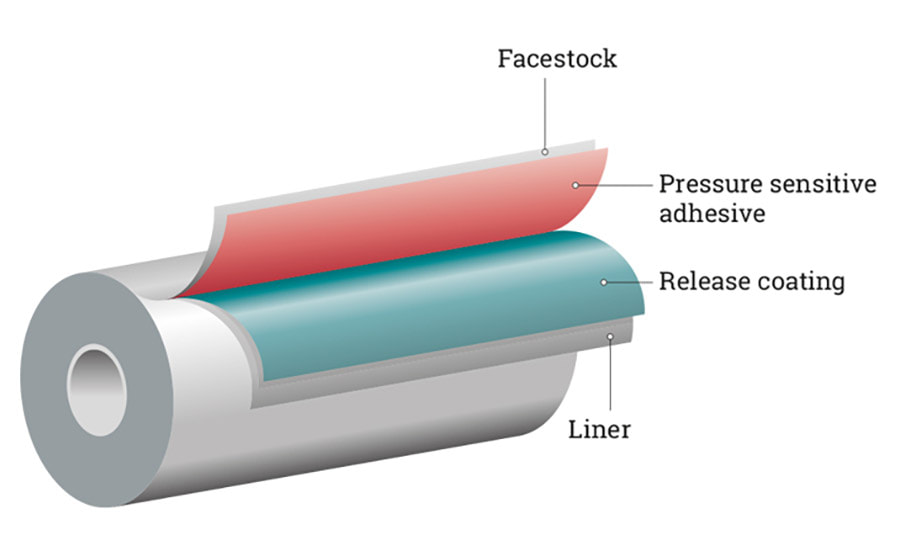
Release coatings — the silicone backbone delivers an easy-peel surface; see the silicone release coating overview.
3D printing resins — difunctionality ensures interlayer crosslinking and build strength.
Adhesives — combines flexibility with precise adhesion control.
Specialty coatings — slip and scratch resistance in UV acrylic systems; explore silicone acrylate additives.
For a broader view of functional fluids, the reactive silicone oil guide covers the full landscape.
Frequently Asked Questions (FAQs)
Q1: What is silicone diacrylate?
It is a difunctional, acrylate-terminated silicone oligomer. Its two CH₂=CH–COO– end groups crosslink into a network under UV or EB radiation.
Q2: What is the difference between silicone diacrylate and silicone dimethacrylate?
The acrylate version cures faster and has lower viscosity. The dimethacrylate version cures more slowly but achieves a higher Tg and better heat resistance.
Q3: Why choose difunctional over monofunctional silicone acrylate?
Difunctional molecules crosslink into a three-dimensional network, providing hardness and solvent resistance. Monofunctional molecules graft as linear side chains, adding flexibility and slip.
Q4: Can silicone diacrylate be cured without UV light?
Yes. Electron beam (EB) curing requires no photoinitiator. Thermal radical initiators are also an option when UV exposure is impractical.
Q5: What applications use silicone diacrylate?
Common uses include UV coatings, adhesives, release coatings, 3D printing resins, and weatherable specialty coatings.
