
A reactive silicone acrylate oligomer is a low-molecular-weight (MW 500–3,000 g/mol) building block that combines a polydimethylsiloxane (PDMS) backbone with pendant or terminal acrylate groups. In UV-curable formulations, it serves two roles at once: it lowers viscosity like a traditional reactive diluent, and it co-polymerizes into the network during UV or EB curing.

This dual function sets it apart from a high-MW silicone acrylate macromer (MW 1,000–25,000 g/mol), which is used primarily as a graft or block segment to build polymer chains rather than to reduce mix viscosity. Understanding this MW/role split is essential for choosing the right ingredient. For a related acryloxy-functional reagent, see triisopropylsilyl acrylate.
Technical Specifications: Oligomer vs. Macromer
The table below compares the two classes across key parameters.
| Parameter | Low-MW Oligomer | High-MW Macromer |
|---|---|---|
| MW range | 500–3,000 g/mol | 1,000–25,000 g/mol |
| Formulation role | Reactive diluent / co-resin | Graft / block monomer |
| Viscosity | Low | High |
| Cure method | UV / EB photopolymerization | Radical / photopolymerization |
| Primary benefit | Lowers viscosity, tunes crosslink density | Builds backbone chains |
Key parameters to evaluate when sourcing a grade include:
Molecular weight — lower MW means lower viscosity but also reduced film flexibility
Acrylate functionality — mono- vs. di-functional controls crosslink density
Silicone content — higher PDMS content improves surface properties but may lower polarity
Cure rate — acryloyl groups react faster than methacryloyl groups under standard UV lamps
Browse our silane products for related reactive components.
Application Overview
Reactive silicone acrylate oligomers fit several UV-cure scenarios. The table below summarizes the most common ones.
| Application | Role | Key Benefit |
|---|---|---|
| UV coatings | Reactive diluent | Viscosity reduction, leveling, scratch resistance |
| UV inks | Co-resin | Flexibility, weatherability |
| Adhesives / release liners | Co-polymerized component | Low surface energy, release stability |
| Blends with acrylates copolymer | Compatibilizer / diluent | Hydrophobicity, weatherability |
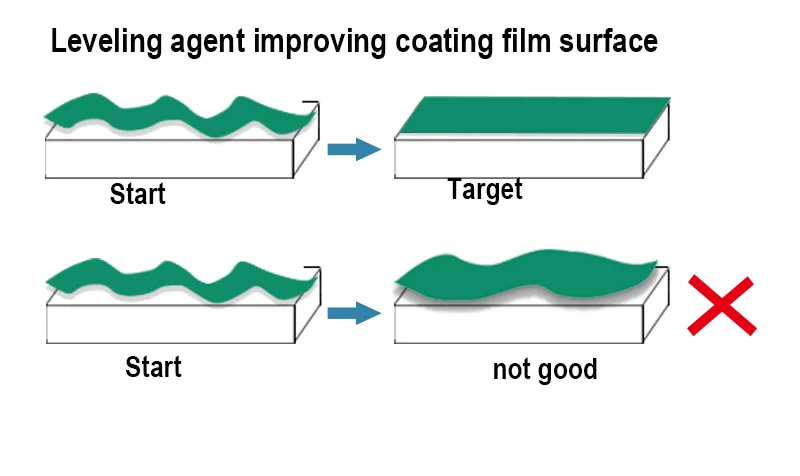
UV coatings are the highest-volume use case. Adding a silicone acrylate oligomer reduces formulation viscosity without VOC penalties. After cure, the silicone segments migrate toward the surface, delivering permanent slip and scratch resistance. They are widely used as silicone acrylate additives in UV acrylic coatings.
UV inks benefit from the oligomer’s ability to tune film flexibility. A mono-functional grade keeps crosslink density low and prevents brittle fracture on flexible substrates.
Adhesives and release coatings rely on the low surface energy of the PDMS backbone. Because the silicone bonds covalently after cure, release force stays stable over time. For permanent slip, a reactive silicone leveling agent offers the same covalent-bond advantage over physical additives.
When blending with an acrylates copolymer base, a short-chain silicone acrylate oligomer acts as both a compatibilizer and a viscosity-reducing diluent, enhancing hydrophobic character and outdoor durability.
Formulation and Grade Selection Guide
Follow these four steps to choose the right grade:
Set your viscosity target. If your process requires <500 mPa·s at 25 °C, select a lower-MW mono-functional grade.
Define crosslink density. Di-functional oligomers cure to harder films; mono-functional grades give flexible films.
Fix the silicone content. Higher PDMS content improves surface slip and water repellency, but may require a coupling step for adhesion to polar substrates.
Match the cure window. Acryloyl-terminated grades react faster than methacryloyl grades under standard UV lamps.
For network-forming alternatives, refer to UV curable silicone crosslinkers such as dimethacrylate PDMS. Also see our guide to reactive silicone oil chemistry and types for broader context.
Frequently Asked Questions (FAQs)
Q1: What is a reactive silicone acrylate oligomer?
It is a low-MW (500–3,000 g/mol) UV-curable reactive diluent that lowers viscosity and co-polymerizes into the cured network.
Q2: How does it differ from a silicone acrylate macromer?
Macromers have higher MW (up to 25,000 g/mol) and build backbone chains. Oligomers reduce viscosity and tune crosslink density.
Q3: What is a reactive diluent in UV-curable formulations?
A reactive diluent is a low-viscosity ingredient that reduces formulation viscosity and participates in the curing reaction — unlike a solvent, it stays in the cured film.
Q4: Why use a silicone acrylate oligomer over a standard acrylate oligomer?
The PDMS backbone adds flexibility, weatherability, low surface energy, and hydrophobicity that standard acrylate oligomers cannot provide.
Q5: How do I select the right silicone acrylate oligomer grade?
Evaluate MW, acrylate functionality, silicone content, and cure rate together. Match viscosity to your process window and functionality to your target film hardness.
