
A PDMS methacrylate macromer is a polydimethylsiloxane chain capped at one end with a polymerizable methacrylate group. This single reactive terminus lets chemists insert the silicone segment directly into a growing polymer backbone via free-radical, RAFT, or ATRP mechanisms. Molecular weights typically span 1,000–25,000 g/mol — heavier than a reactive oligomer yet light enough to copolymerize efficiently.
The term macromer (or macromonomer) stresses the monomer role: the molecule carries exactly one polymerizable function and behaves as an oversized vinyl monomer during chain growth. That distinction matters when designing graft or block architectures, because every incorporated macromer unit contributes an intact, flexible silicone side chain to the final copolymer.
Key Parameters and Technical Comparison
Choosing the right macromer starts with understanding functionality, molecular weight, silicone content, reactivity ratio, and glass-transition temperature.
| Parameter | Mono-functional Macromer | Difunctional Dimethacrylate | Role |
|---|---|---|---|
| Functionality | 1 | 2 | Graft/block vs. crosslinked network |
| Typical MW (g/mol) | 1,000–25,000 | 1,000–25,000 | Silicone segment length |
| Polymerization role | Graft monomer / block segment | UV crosslinker | Determines chain topology |
| Tg | ≈ −120 °C | ≈ −120 °C | Silicone soft-segment contribution |
| Silicone content | Tunable | Tunable | Adjusts surface and bulk properties |
The mono-functional form is the workhorse for graft and block copolymerization. The difunctional variant creates crosslinked silicone networks — see our dedicated article on UV curable silicone crosslinkers for that route.
Reactivity ratios also deserve attention. Methacrylate-terminated PDMS often shows r₁ < 1 when copolymerized with standard acrylates, meaning composition drifts unless starved-feed conditions are applied. Matching MW to the target silicone content before synthesis saves reformulation cycles.
Synthesis Routes
Most commercial PDMS methacrylate macromers are produced by end-capping a hydroxy- or hydride-terminated polydimethylsiloxane with a methacrylate-functional silane. Two common routes are:
Silane coupling — Monohydroxy PDMS reacts with methacryloxypropyl trimethoxysilane under acid or base catalysis.
Hydrosilylation — Vinyl-terminated PDMS adds across a methacrylate silane via Pt-catalyzed addition.
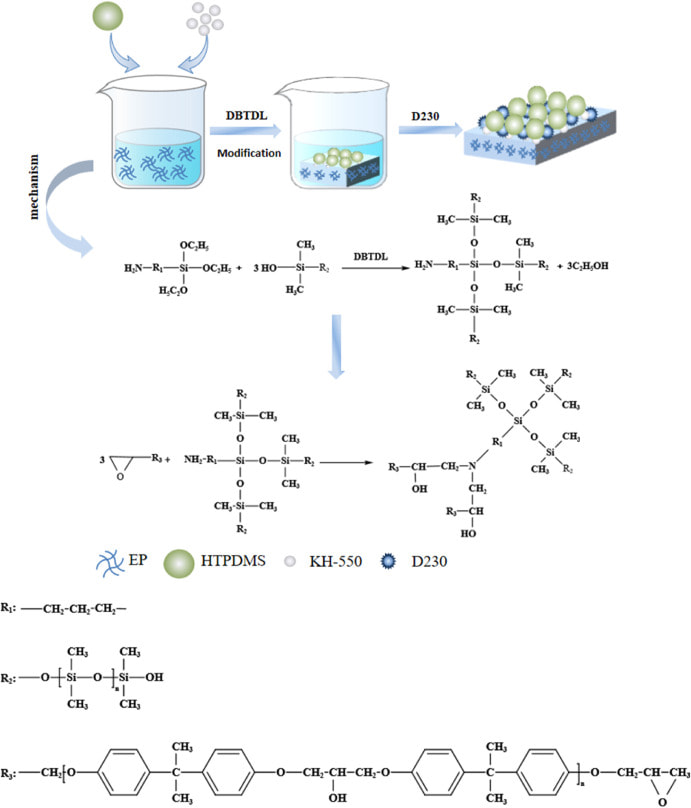
Both routes deliver a well-defined single-ended macromer. Dispersity stays low (Đ < 1.3) when starting from narrow-distribution precursors — a key factor for controlled-radical polymerization. Browse our full range of silane products for related reactive intermediates, including triisopropylsilyl acrylate as a related silyl-protected acrylate option.
Copolymerization Routes and Applications
The four main polymerization pathways each produce a distinct chain architecture:
| Route | Mechanism | Product Form | Typical Application |
|---|---|---|---|
| Graft copolymerization | Free-radical onto acrylic/vinyl backbone | Comb/graft copolymer | Silicone-modified acrylic coatings |
| Block (RAFT / ATRP) | Controlled radical | Defined-MW block copolymer | Surfactant / compatibilizer |
| Random copolymerization | Free-radical with acrylates | Statistical copolymer | Hydrophobic / weatherable coatings |
| UV photocuring | Photo-initiated radical | Crosslinked network | Coatings, inks, adhesives |
Graft copolymerization is the most widely used route. The PDMS methacrylate macromer copolymerizes with methyl methacrylate, butyl acrylate, or styrene to yield comb-shaped architectures. For a detailed look at this chemistry, see the mono-PDMS graft route to a silicone modified acrylic resin.
RAFT and ATRP open the door to precision block copolymers. Both methods preserve chain-end fidelity, enabling amphiphilic PDMS-b-poly(acrylate) diblocks useful as compatibilizers or surface-active agents.
Random copolymers at 5–30 wt % macromer content improve water repellency and UV durability in exterior coatings — functions also delivered by silicone acrylate additives for anti-scratch and slip performance.
Selection Guide
| Need | Recommendation |
|---|---|
| Graft or block architecture | Single-ended (mono-functional) macromer |
| Crosslinked network | Difunctional dimethacrylate PDMS |
| High silicone content | Higher MW (10,000–25,000 g/mol) |
| Better comonomer compatibility | Lower MW (1,000–5,000 g/mol) |
| Controlled RAFT/ATRP architecture | Narrow-dispersity, defined end-group grade |
For broader context on silicone intermediates, see our complete guide to reactive silicone oil functional types.
Frequently Asked Questions (FAQs)
Q1: What is a PDMS methacrylate macromer?
A single-ended, methacrylate-functionalized polydimethylsiloxane that acts as a polymerizable macromonomer in free-radical, RAFT, or ATRP copolymerization systems.
Q2: What is the difference between a macromer and an oligomer?
Molecular weight is the key dividing line. Macromers fall between 1,000 and 25,000 g/mol and target graft or block architectures. Reactive oligomers sit in the 500–3,000 g/mol range and mainly function as reactive diluents or crosslinkers in UV formulations.
Q3: How is a PDMS methacrylate macromer synthesized?
The two main routes are silane-coupling of monohydroxy PDMS with methacryloxypropyl trimethoxysilane, and Pt-catalyzed hydrosilylation of vinyl-terminated PDMS with a methacrylate silane. Both deliver a single reactive terminus with low dispersity.
Q4: Can a PDMS methacrylate macromer be used in RAFT or ATRP?
Yes. Narrow-dispersity grades are fully compatible with both techniques and enable well-defined PDMS-containing block copolymers with controlled molecular weight (Đ < 1.3).
Q5: What molecular weight should I choose for graft copolymerization?
Balance silicone content against comonomer compatibility. Lower MW (1,000–5,000 g/mol) gives better miscibility with acrylic monomers; higher MW (10,000–25,000 g/mol) maximizes the hydrophobic silicone contribution per graft site.
