
The field of advanced wound care is continually evolving, with new materials being developed to improve healing outcomes, especially for chronic and complex wounds. Among these innovations, the synthesis of silicone-based hydrogels for wound care has emerged as a particularly promising area. These unique materials combine the high oxygen permeability of silicones with the high water content of hydrogels, creating an ideal microenvironment for tissue regeneration. By mimicking the properties of natural skin, silicone hydrogels can protect the wound, manage moisture, and facilitate the body’s natural healing processes.
This article explores the key methods and materials involved in creating these advanced wound dressings. We will examine the core components, polymerization techniques, and the ways these hydrogels can be tailored to meet specific therapeutic needs. Understanding the synthesis process is crucial for appreciating how these materials offer superior performance in promoting faster and more effective healing.
Core Components and Chemical Foundations
The effectiveness of a silicone hydrogel begins with its chemical makeup. The synthesis involves a careful combination of silicone-containing monomers or macromers with hydrophilic (water-loving) components. This blend is what gives the final product its unique dual properties.
A primary building block is often a polymerizable silicone, such as a difunctional polydimethylsiloxane (PDMS) methacrylate. PDMS is well-known for its excellent gas permeability, biocompatibility, and stability. The methacrylate groups at the ends of the PDMS chain allow it to participate in polymerization reactions, forming the backbone of the hydrogel network. Products like 1-(Dimethacryloxypropyl)-1,1,3,3,3-pentamethyldisiloxane are examples of the types of siloxane-based monomers that can be used in these formulations.
To achieve the “hydrogel” characteristic, hydrophilic monomers are incorporated. Common choices include:
- N,N-dimethylacrylamide (DMA): This monomer is highly hydrophilic and helps the hydrogel absorb and retain significant amounts of water, which is essential for maintaining a moist wound environment.
- 2-hydroxyethyl methacrylate (HEMA): Another popular hydrophilic monomer that contributes to the water content and overall softness and flexibility of the hydrogel.
- N-vinylpyrrolidone (NVP): Used to increase water content and improve the surface wettability of the material, making it more comfortable against the skin.
Finally, crosslinking agents are added to connect the polymer chains, creating a stable, three-dimensional network. Ethylene glycol dimethacrylate (EGDMA) is a common crosslinker that ensures the hydrogel maintains its structural integrity and does not dissolve. The ratio of these components—silicone, hydrophilic monomers, and crosslinkers—can be precisely adjusted to control the final properties of the wound dressing, such as its water content, oxygen permeability, and mechanical strength.
Synthesis of Silicone-Based Hydrogels for Wound Care Key Methods
Creating a functional silicone hydrogel involves transforming the liquid monomer mixture into a solid, stable material. Several polymerization techniques can be used, each with its own advantages for different applications, such as pre-formed films or spray-on dressings. The choice of method depends on the desired final form and the specific requirements of the wound care product.
Free-Radical Polymerization
This is the most common method for synthesizing silicone hydrogels. The process is initiated by a molecule that generates free radicals, which then start a chain reaction, linking the monomers together.
- Initiation: The reaction begins with an initiator, which can be activated by heat or ultraviolet (UV) light. For medical applications, photoinitiators that respond to visible or long-wave UV light are preferred to avoid damaging tissue. The initiator breaks down to form highly reactive free radicals.
- Propagation: These free radicals attack the double bonds in the methacrylate or acrylamide monomers, adding them to the growing polymer chain. This process repeats rapidly, extending the polymer chains.
- Termination: The reaction stops when two growing chains combine or when they react with an impurity. The crosslinking agents are incorporated during the propagation step, linking different polymer chains together to form the gel network.
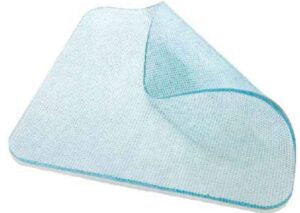
This method is versatile and allows for the creation of pre-formed sheets or films that can be cut to size and applied as a patch-like dressing.
In-Situ Polymerization (Spray-On Dressings)
For more direct application, silicone hydrogels can be polymerized directly on the wound site. This approach is particularly useful for covering large or irregularly shaped wounds, such as burns.
In this method, the monomer mixture is combined with an initiator in a sprayable solution. When sprayed onto the wound, the polymerization process is triggered. The trigger can be:
- Moisture-activated: The polymerization starts upon contact with the moisture from the wound bed.
- Light-activated: A portable light source is used to cure the sprayed liquid into a flexible film.
- Two-component systems: Two separate solutions are sprayed simultaneously, and they react upon mixing on the wound surface.
This technique creates a conforming, breathable “second skin” that acts as a barrier against infection while promoting healing. The formulation can also include isocyanates that react with diols or diamines to form silicone polyurethaneurea hydrogels, which offer excellent flexibility and adhesion.
Synthesis of Silicone-Based Hydrogels for Wound Care Comparing Applications
Different wound types require dressings with different properties. The synthesis method plays a crucial role in determining the final form and function of the silicone hydrogel. Here is a comparison of the primary approaches:
| Feature | Pre-formed Film (Free-Radical Polymerization) | In-Situ Spray (Spray-On Polymerization) |
| Application | Cut to size, applied as a patch with secondary adhesive. Best for smaller, uniform wounds like ulcers or surgical sites. | Sprayed directly onto the wound. Ideal for large areas, burns, or irregularly shaped wounds. |
| Wound Conformity | Good, but may have gaps or creases on highly contoured body parts. | Excellent, creates a seamless and perfectly conforming barrier. |
| Sterility | Sterilized after manufacturing and packaged for single use. High level of sterility assurance. | Relies on sterile components and clean application. The polymerization process itself can be antimicrobial. |
| Mechanical Strength | Generally higher due to controlled manufacturing. Can be reinforced with fabric for added durability. | Typically lower mechanical strength. Forms a thin, flexible film. |
| Convenience | Easy to apply and remove for wound inspection. | Very convenient for initial application, especially on difficult-to-dress areas. Removal may be more complex. |
| Specialization | Can be manufactured into complex multi-layer dressings with reservoirs for saline or medication. | Can be formulated for programmed degradation, eliminating the need for removal. |
Synthesis of Silicone-Based Hydrogels for Wound Care Additives and Modifications
The basic synthesis of silicone-based hydrogels for wound care provides a platform that can be enhanced with various additives to impart therapeutic properties. These modifications turn a simple dressing into an active participant in the healing process.
Antimicrobial Agents
To prevent or treat wound infections, antimicrobial agents can be incorporated into the hydrogel. This can be achieved in several ways:
- Covalent Bonding: Antimicrobial molecules, like quaternary ammonium compounds or even heparin, can be chemically bonded to the polymer network. This creates a surface that is inherently resistant to bacterial colonization. The use of a Silane Coupling Agent can facilitate the attachment of these functional molecules to the silicone backbone.
- Slow Release: Antimicrobial substances, such as silver ions, antibiotics, or natural agents like honey, can be loaded into the hydrogel matrix. The dressing then releases these agents slowly over time, providing sustained protection against pathogens.
Growth Factors and Bioactive Molecules
To accelerate healing, especially in chronic wounds that have stalled, growth factors can be added to the hydrogel formulation. These proteins signal cells to proliferate, migrate, and form new tissue. Collagen can also be included to provide a scaffold for new dermal tissue formation, while other agents can modulate the wound’s pH to create an environment more conducive to healing.
Programmable Properties
Advanced synthesis techniques allow for the creation of “smart” hydrogels. For example, by including water-soluble polymers like polyvinylpyrrolidone (PVP) or polyethylene oxide (PEO), the dressing’s properties can change over time. Initially, these molecules make the surface highly lubricious and moist. As they slowly dissolve or are absorbed, the hydrogel can become more hydrophobic, reducing its moisture transmission rate to match the changing needs of a healing wound.
These functional enhancements make silicone hydrogels a highly adaptable and powerful tool in modern wound management, capable of addressing the complex challenges of wound healing in a targeted and effective manner.
Frequently Asked Questions
- What makes silicone hydrogels good for wound care?
Silicone hydrogels offer high oxygen permeability to support cell metabolism and high water content to maintain a moist healing environment. Their soft, flexible nature also minimizes irritation and provides comfort for the patient. - How are silicone hydrogels sterilized for medical use?
Pre-formed silicone hydrogel dressings are typically sterilized using methods like gamma radiation, ethylene oxide gas, or autoclaving after they are manufactured and sealed in sterile packaging. - Can silicone hydrogels be used for infected wounds?
Yes, especially when they are formulated with antimicrobial agents. These dressings can release substances like silver ions or antibiotics directly into the wound bed to control infection while promoting healing. - Are silicone hydrogels biodegradable?
Standard silicone hydrogels are biostable. However, they can be engineered with degradable linkages in their polymer backbone, allowing them to break down slowly over time. This is particularly useful for internal applications or spray-on dressings. - How is a spray-on silicone hydrogel different from a liquid bandage?
While both are applied as liquids, spray-on silicone hydrogels are specifically designed to offer high oxygen and moisture permeability, mimicking skin. Traditional liquid bandages often form a less breathable, more occlusive barrier.
