
Managing foam control is a critical challenge in industrial processing, from wastewater treatment to food production. Unchecked foam can reduce vessel capacity, cause overflows, and disrupt efficient operations. While generic defoamers exist, custom silicone fluids for anti-foaming applications often provide the precise chemical stability and performance required for specialized environments. By tailoring the molecular structure and viscosity of silicone fluids, manufacturers can achieve superior knockdown speeds and long-lasting foam suppression that off-the-shelf products simply cannot match.
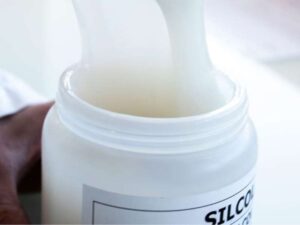
Why Choose Custom Silicone Fluids for Anti-Foaming Applications?
Standard antifoams may work for general purposes, but they often fail under extreme conditions like high pH, high temperatures, or specific chemical interactions. Custom silicone fluids for anti-foaming applications are engineered to withstand these rigorous environments.
When you customize a silicone fluid, you aren’t just buying a product; you are optimizing a process. These fluids typically use polydimethylsiloxane (PDMS) as a base, but manufacturers modify them with various functional groups to improve compatibility or insolubility within specific foaming media. For instance, modifying the polymer chain length can adjust viscosity, ensuring the antifoam disperses correctly without affecting the final product’s quality.
Key Benefits of Customization
- Thermal Stability: Essential for processes involving high heat, such as distillation or chemical synthesis.
- Chemical Inertness: Ensures the antifoam does not react with the process media.
- Low Surface Tension: Allows for rapid spreading over foam lamellae, rupturing bubbles instantly.
- Regulatory Compliance: Custom formulations can be designed to meet specific FDA, Kosher, or Halal requirements for food-grade applications.
Effective Defoaming Chemistry
The effectiveness of silicone antifoams lies in their unique chemistry. At their core, these are siloxanes—chains of alternating silicon and oxygen atoms.
For specialized synthesis, precursors like Trimethoxysilane are often used as building blocks. These silanes allow chemists to introduce specific functionalities into the silicone backbone. By controlling the degree of polymerization and the type of organic groups attached to the silicon atoms, manufacturers create fluids that are hydrophobic enough to be incompatible with the foam (causing rupture) yet dispersible enough to do the job.
Another crucial component in advanced silicone synthesis is Triisopropylsilane. Bulky groups like isopropyl can provide steric hindrance, protecting the siloxane bond from hydrolysis in aggressive acidic or basic environments. This makes the resulting antifoam far more durable in harsh chemical processing streams.
Silicone Fluid Types Comparison
Choosing the right base fluid is essential for developing custom silicone fluids for anti-foaming applications. Below is a comparison of common silicone structures and their typical industrial uses.
| Silicone Fluid Type | Key Characteristics | Primary Anti-Foaming Applications |
| Polydimethylsiloxane (PDMS) | High surface activity, chemically inert, wide viscosity range. | General industrial processing, wastewater treatment, textile manufacturing. |
| Organo-Modified Siloxanes | Enhanced compatibility with organic systems, paintable. | Paints, coatings, inks, and agricultural formulations. |
| Fluorosilicones | Extreme resistance to solvents and harsh chemicals. | Oil and gas processing, chemical solvent defoaming. |
| Silicone Emulsions | Water-dispersible, easy to handle and dose. | Food and beverage processing, water-based cleaning systems. |
Formulations and Additives
To create high-performance custom silicone fluids for anti-foaming applications, simple PDMS is often not enough. Formulators incorporate specific silanes to tweak performance.
For example, Methoxytriethyleneoxypropyltrimethoxysilane acts as a specialized coupling agent or modifier. Its ether linkage can improve the solubility of the silicone in polar systems without sacrificing its defoaming capability. This balance is delicate; if the antifoam is too soluble, it won’t separate from the liquid to break the bubbles. If it’s too insoluble, it might cause surface defects like “fisheyes” in coatings.
In high-performance polymer manufacturing or reactive systems, Tetravinylsilane might be utilized during the synthesis of the silicone fluid itself. The vinyl groups allow for cross-linking or further functionalization, creating branched silicone structures that offer different rheological properties compared to linear chains. These branched structures often exhibit better persistence, meaning they keep working longer after the initial dosage.
Industrial Applications
Food and Beverage
In fermentation processes or vegetable washing, foam can ruin efficiency. However, the antifoam must be non-toxic and flavorless. Custom emulsions using food-grade silicone fluids are standard here.
Paints and Coatings
Foam during the mixing or application of paint leads to craters and poor finishes. Here, custom silicone fluids for anti-foaming applications must be carefully balanced to destroy foam without causing surface defects.
Oil and Gas
Drilling muds and separators deal with high pressure and crude oil mixtures. These sectors require specialized fluorosilicones or high-viscosity PDMS fluids to break heavy, stable foams.
Wastewater Treatment
Biological treatment plants generate massive amounts of foam. The treatment process requires a cost-effective, durable antifoam that does not harm the bacteria involved.
Frequently Asked Questions (FAQs)
- What is the difference between an antifoam and a defoamer?
An antifoam is added to a process liquid before foam generation to prevent it from forming. A defoamer is added after foam has already formed to knock it down and eliminate it. Many custom silicone fluids can perform both functions. - Why are silicones preferred over organic defoamers?
Silicones have significantly lower surface tension than organic oils, meaning they spread faster and are effective at much lower concentrations. They are also more chemically inert and thermally stable, making them suitable for a wider range of harsh industrial environments. - Can custom silicone fluids cause surface defects in paints?
Yes, if not formulated correctly. Excessively incompatible silicones can cause “fisheyes” or craters. Custom formulations balance incompatibility (needed for defoaming) with compatibility (needed to avoid defects), often using organo-modified siloxanes to ensure a smooth finish. - Are silicone antifoams safe for food processing?
Yes, provided they are formulated with food-grade ingredients and meet regulatory standards (such as FDA 21 CFR 173.340). Custom fluids can be specifically designed to comply with these strict safety and purity regulations for use in food and beverage production. - How do I determine the right dosage for a silicone antifoam?
Dosage depends on the foaming medium’s severity. Typically, silicone antifoams are effective at very low levels, often between 10 to 100 ppm. It is best to start with a low dose and gradually increase it until foam control is achieved to avoid waste or defects.
